Introduction: The Eternal City of Light

Varanasi, also known as Kashi or Banaras, is one of the oldest continuously inhabited cities in the world and stands as a spiritual heart of India. Situated along the banks of the sacred Ganges River, the city radiates a mystical aura that draws millions of pilgrims, seekers, and travelers every year. The essence of Varanasi lies not just in its geography but in its timeless connection to life, death, and liberation.
Varanasi is not merely a destination; it is a living embodiment of spirituality where every corner whispers stories of devotion, rituals, and ancient traditions. The city thrives on a unique blend of chaos and calm, where bustling streets coexist with moments of deep introspection and peace. From the ringing of temple bells to the chants of mantras echoing through the ghats, Varanasi offers an experience that transcends the ordinary.
For centuries, Varanasi has been regarded as a gateway to moksha (liberation), making it one of the most sacred pilgrimage sites in Hinduism. Its spiritual magnetism continues to inspire poets, philosophers, and travelers from across the globe, making it a timeless symbol of India’s cultural and religious heritage.
The Sacred Ghats: Where Life Meets Eternity
The ghats of Varanasi are perhaps the most iconic aspect of the city, forming a continuous stretch of steps leading down to the Ganges. There are over 80 ghats, each with its own significance, history, and spiritual importance. Among them, Manikarnika Ghat and Assi Ghat stand out for their deep cultural and religious relevance.
The ghats are not just physical spaces; they are spiritual stages where the cycle of life and death unfolds every day. Pilgrims gather here to take holy dips, believing that the sacred waters cleanse them of sins and bring them closer to salvation. The sight of cremation rituals at Manikarnika Ghat serves as a powerful reminder of life’s impermanence and the eternal nature of the soul.
From sunrise boat rides to evening prayers, the ghats offer a continuous flow of spiritual experiences that captivate the senses and awaken the soul. Whether it is the serenity of early morning or the vibrancy of evening rituals, the ghats remain the heartbeat of Varanasi’s spiritual identity.
Kashi Vishwanath Temple: The Spiritual Core
At the center of Varanasi’s spiritual universe lies the revered Kashi Vishwanath Temple, dedicated to Lord Shiva. This temple is one of the twelve Jyotirlingas, making it one of the most sacred Shiva temples in India. Devotees from across the world visit this holy shrine to seek blessings and experience divine energy.
The temple symbolizes the cosmic power of Lord Shiva and represents the ultimate truth of existence. The golden spire of the temple glistens under the sun, reflecting the grandeur and sanctity of this ancient shrine. The recently developed Kashi Vishwanath Corridor has further enhanced accessibility and the overall spiritual experience for visitors.
A visit to Varanasi is considered incomplete without offering prayers at Kashi Vishwanath, as it is believed to grant spiritual liberation and inner peace. The temple stands as a beacon of faith, devotion, and timeless tradition, anchoring the spiritual essence of the city.
The Ganga Aarti: A Divine Spectacle
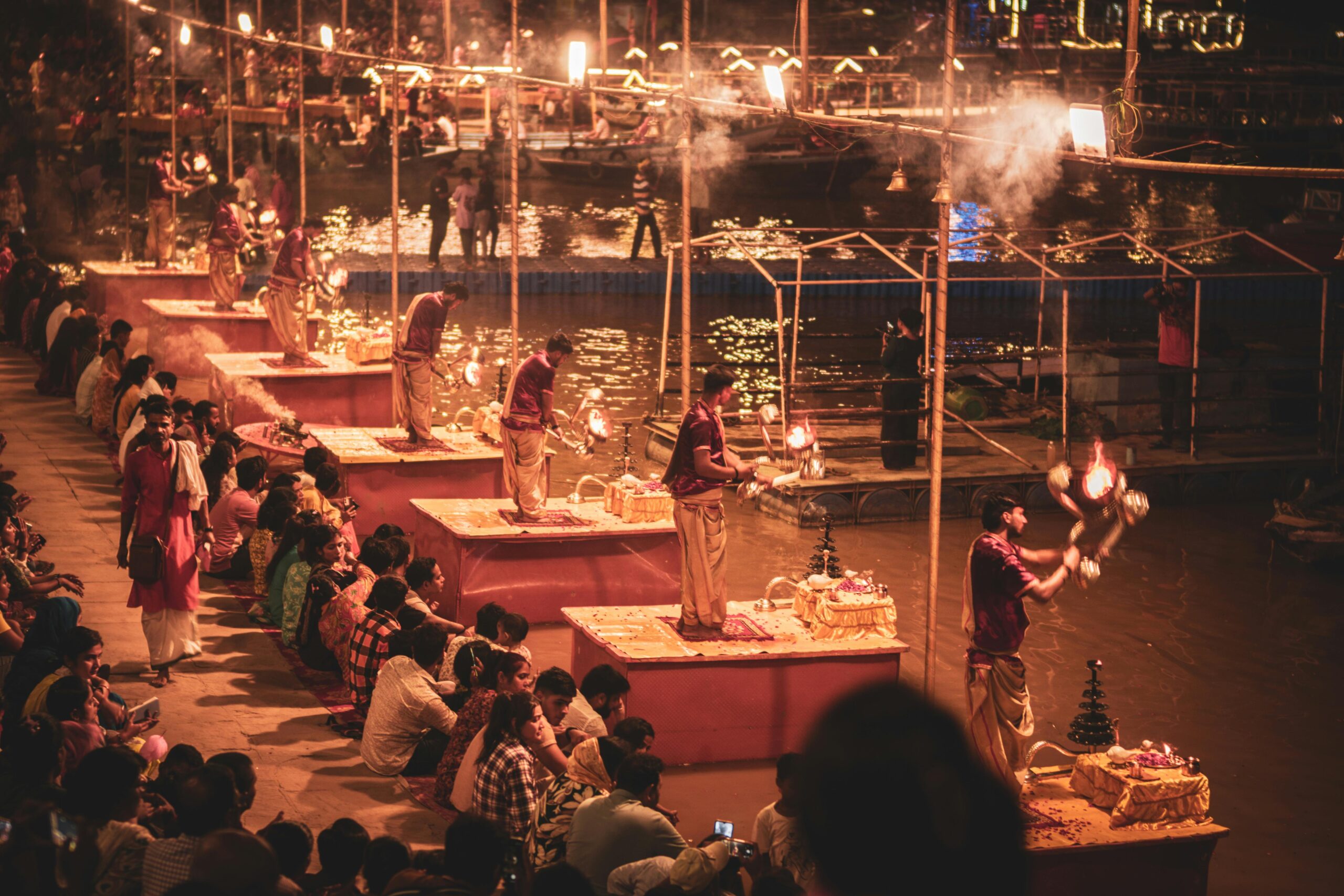
One of the most mesmerizing experiences in Varanasi is the Ganga Aarti held every evening at Dashashwamedh Ghat. This grand ritual is a synchronized performance of devotion, where priests offer prayers to the Ganges using fire lamps, incense, and rhythmic chants.
The Ganga Aarti is not just a ritual; it is a spiritual celebration that connects humans with the divine. The sight of illuminated lamps reflecting on the river, combined with the sound of bells and mantras, creates an atmosphere of transcendence and awe.
For many visitors, witnessing the Ganga Aarti becomes a deeply emotional and transformative experience, leaving a lasting impression on the soul. It encapsulates the essence of Varanasi’s spirituality and its deep reverence for the sacred river.
Culture, Traditions, and Timeless Heritage
Varanasi is not only a spiritual hub but also a vibrant center of culture and tradition. The city is famous for its Banarasi silk sarees, classical music, and rich culinary heritage. It has been a cradle of art, learning, and philosophy for centuries.
The cultural fabric of Varanasi is deeply intertwined with its spiritual roots, creating a unique blend of tradition and creativity. Renowned musicians and scholars have emerged from this city, contributing to India’s rich artistic legacy.
From narrow गलियाँ (lanes) filled with local delicacies to the rhythmic beats of classical music, Varanasi offers a sensory journey through India’s cultural richness. Every aspect of the city reflects its timeless charm and enduring heritage.
Spiritual Philosophy: Life, Death, and Liberation
Varanasi holds a unique place in Hindu philosophy as a city where life and death coexist harmoniously. It is believed that dying in Varanasi grants moksha, freeing the soul from the cycle of rebirth. This belief draws countless pilgrims and elderly individuals to spend their final days in the city.
The presence of cremation ghats and continuous funeral rituals reflects the acceptance of death as a natural part of existence. Unlike many cultures that fear death, Varanasi embraces it as a transition to a higher state of being.
This profound spiritual philosophy makes Varanasi a place of introspection, where visitors are encouraged to reflect on the deeper meaning of life and existence. The city teaches that life is transient, but the soul is eternal.
Conclusion: A Journey Beyond the Physical World
Varanasi is more than just a city; it is an experience that transcends time, space, and physical reality. Its spiritual energy, cultural richness, and historical depth make it one of the most unique destinations in the world.
The true essence of Varanasi lies in its ability to transform those who visit it, offering not just memories but profound spiritual insights. Whether it is the serenity of the Ganges, the devotion of the temples, or the vibrancy of its culture, Varanasi leaves an indelible mark on the soul.
In a fast-paced modern world, Varanasi stands as a reminder of timeless values, spiritual awakening, and the eternal journey of the human soul. It is a place where one does not just travel, but truly discovers the deeper essence of life itself.
Leave a Reply