The Spiritual Meaning and Significance of Raksha Bandhan
Raksha Bandhan is a cherished Indian festival that celebrates the sacred bond between brothers and sisters. The word “Raksha” means protection, and “Bandhan” means bond, together symbolizing a promise of lifelong care and support. Celebrated on the full moon day of the Hindu month of Shravan, this festival carries deep emotional and spiritual meaning. Raksha Bandhan is not merely about tying a thread; it is about strengthening relationships through love, trust, and responsibility. Sisters pray for their brothers’ well-being, while brothers vow to protect and stand by them in all circumstances.
Historically and mythologically, Raksha Bandhan has roots in various legends, including the story of Krishna and Draupadi, where a simple act of care formed an eternal bond of protection. Over time, the festival evolved into a beautiful cultural tradition observed across India and among Indian communities worldwide. The festival teaches that protection is not just physical but emotional and moral support. It reinforces family unity and mutual respect.
Raksha Bandhan also transcends biological relationships. In many communities, women tie rakhi to cousins, friends, soldiers, and mentors as a symbol of gratitude and protection. The delicate thread of rakhi carries the powerful message of unity, harmony, and unconditional love. It is a reminder that relationships are sacred responsibilities. As families gather to celebrate, homes are filled with joy, sweets, laughter, and heartfelt blessings, making Raksha Bandhan a festival of emotional richness and spiritual warmth.
Rakhi Ceremony: Step-by-Step Ritual Guide
The Rakhi ceremony is the heart of Raksha Bandhan celebrations. It usually begins with sisters preparing for the ritual by dressing in traditional attire and arranging the puja thali. Brothers sit facing east or north, considered auspicious directions in Hindu customs. The ceremony begins with applying tilak on the brother’s forehead using kumkum or roli. The tilak symbolizes blessings, protection, and the invocation of divine energy. After the tilak, rice grains (akshat) are placed on the forehead, signifying prosperity and completeness.
The sister then ties the rakhi thread around her brother’s wrist while chanting prayers for his health, success, and happiness. Some families recite mantras or sing traditional Raksha Bandhan songs during this moment. The act of tying the rakhi represents a sacred promise of lifelong protection and unwavering support. After tying the rakhi, the sister performs aarti by rotating a lit diya in front of her brother’s face, symbolizing warding off negative energies.
The ceremony concludes with the exchange of sweets and gifts. Brothers often present gifts or monetary tokens to their sisters as a gesture of gratitude and affection. This exchange is not about material value but about expressing love and appreciation. Elders bless the siblings, adding warmth and blessings to the occasion. The simplicity of the ritual carries immense emotional significance, reinforcing bonds of care and responsibility that last a lifetime.
Puja Thali Setup: Essentials and Symbolism
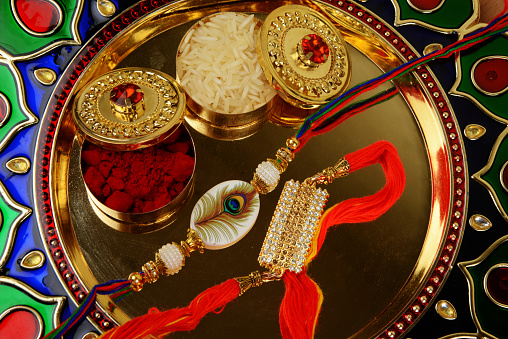
A beautifully arranged puja thali enhances the spiritual atmosphere of Raksha Bandhan. The thali typically includes a rakhi thread, roli (vermilion), rice grains, diya (oil lamp), sweets, and sometimes a coconut. Each element carries symbolic meaning rooted in tradition. The diya represents divine light and positivity, illuminating the path of righteousness. Lighting the lamp before the ceremony invites auspiciousness and spiritual protection into the home.
Roli and rice signify blessings and prosperity. The rakhi itself, often decorated with beads or sacred symbols like Om or Swastika, symbolizes protection and love. Sweets placed on the thali represent sweetness in relationships and harmony within the family. The puja thali is not merely decorative; it embodies cultural heritage and sacred intention. Many families decorate the thali with flowers, colorful fabrics, and rangoli patterns to enhance its beauty.
Preparing the thali can be a joyful family activity, especially for children who learn the cultural significance of each item. Attention to detail in the thali setup reflects devotion and respect for tradition. The ritualistic arrangement fosters mindfulness and gratitude. Whether simple or elaborate, the puja thali becomes the centerpiece of the Rakhi ceremony, radiating warmth and spiritual significance throughout the celebration.
Gift Traditions and Modern Celebrations
Gift-giving is an integral part of Raksha Bandhan, symbolizing appreciation and affection. Traditionally, brothers give gifts or money to their sisters as a token of gratitude. These gifts can range from clothes and jewelry to personalized keepsakes. The true value of a Rakhi gift lies in the emotion behind it rather than its price. Sisters may also exchange thoughtful presents with their brothers, reflecting mutual love.
In modern times, Raksha Bandhan celebrations have evolved with creative gift ideas such as customized photo frames, handwritten letters, or digital surprises for siblings living far apart. Online platforms now allow sending rakhis and gifts across countries, keeping families connected despite distance. Technology has expanded the reach of Raksha Bandhan, but its emotional essence remains unchanged. The festival continues to bridge physical gaps with heartfelt gestures.
Beyond siblings, many communities extend Rakhi traditions to soldiers, honoring their role in protecting the nation. This practice broadens the meaning of Raksha Bandhan to include gratitude and national unity. Corporate offices and schools also celebrate the festival, promoting harmony and teamwork. Through thoughtful gifts and meaningful interactions, Raksha Bandhan remains a festival of affection and togetherness in both traditional and contemporary settings.
Celebrating Raksha Bandhan with Love and Responsibility
Celebrating Raksha Bandhan goes beyond rituals and gifts; it is about nurturing lifelong relationships. The festival encourages siblings to reflect on shared memories and mutual responsibilities. Raksha Bandhan teaches that protection is a two-way promise built on trust and empathy. Sisters pray for their brothers’ well-being, while brothers pledge emotional and moral support.
Families often use the occasion to reconnect, resolve misunderstandings, and strengthen bonds. Preparing sweets together, sharing laughter, and reminiscing about childhood create cherished memories. The festival becomes an opportunity to express gratitude for the presence of siblings in one’s life. Even those separated by distance celebrate virtually, proving that love transcends boundaries.
Ultimately, Raksha Bandhan is a celebration of unity and unconditional affection. The sacred thread tied on this day symbolizes an unbreakable bond of care and commitment. By honoring traditions like the Rakhi ceremony, puja thali setup, and meaningful gift exchange, families keep cultural values alive. As the diya glows and blessings are exchanged, Raksha Bandhan becomes a beautiful reminder that relationships thrive on love, respect, and shared responsibility.
Leave a Reply