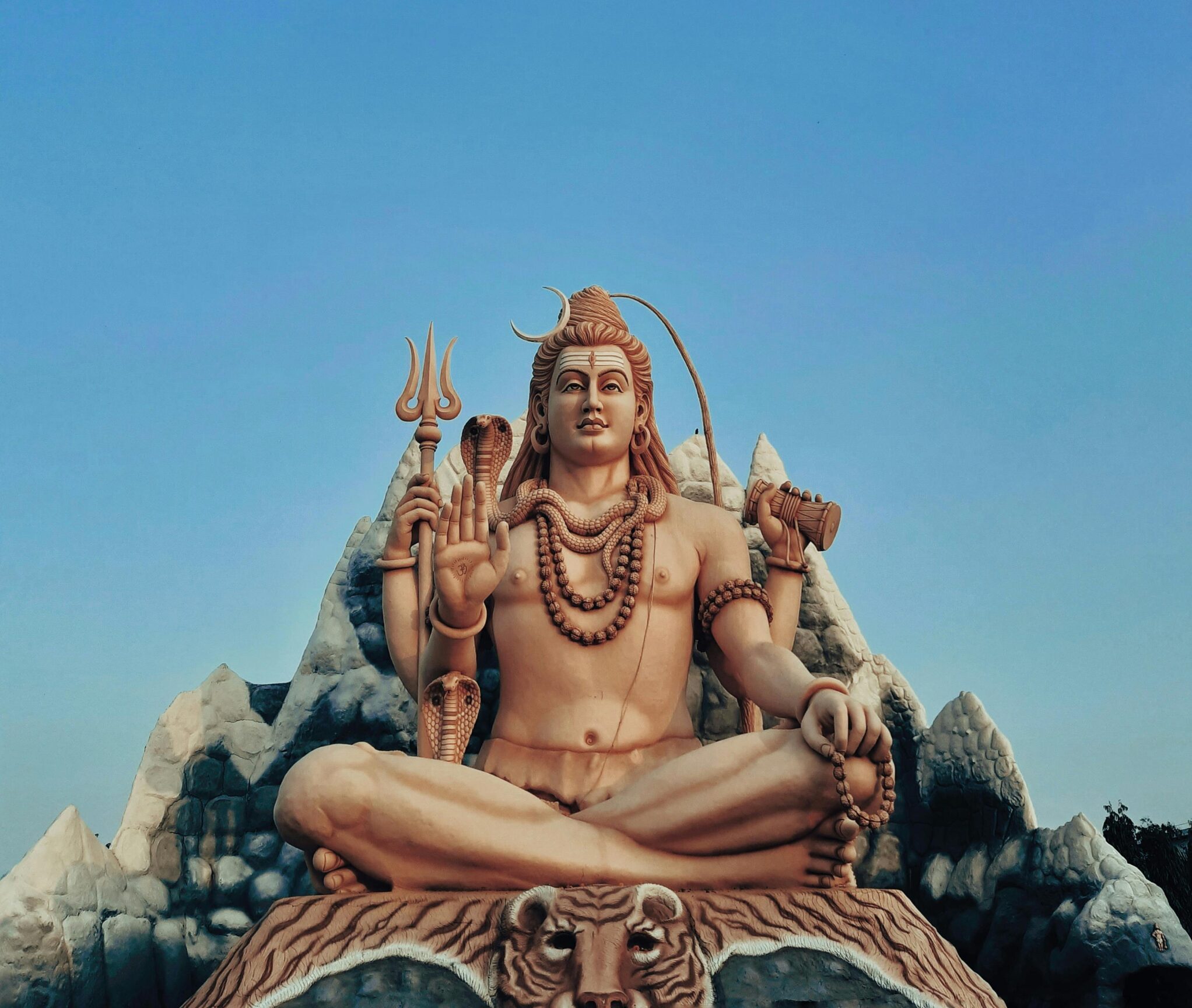
Civilizations rise and fall. Technology transforms the way we live. Generations redefine identity, success, love, and purpose. Yet across centuries, one figure continues to sit in stillness — untouched by trends, unmoved by time. That figure is Shiva.
The question of relevance often comes from a place of doubt: Can an ancient deity truly guide modern life? But perhaps the better question is this — What if Shiva was never bound to a time period at all?
Because Shiva is not merely a mythological character. He is a symbolic blueprint of human evolution — psychological, emotional, and spiritual. His stories endure not because they are old, but because they are timeless.
Let us explore why.
The Power of Stillness in Every Age
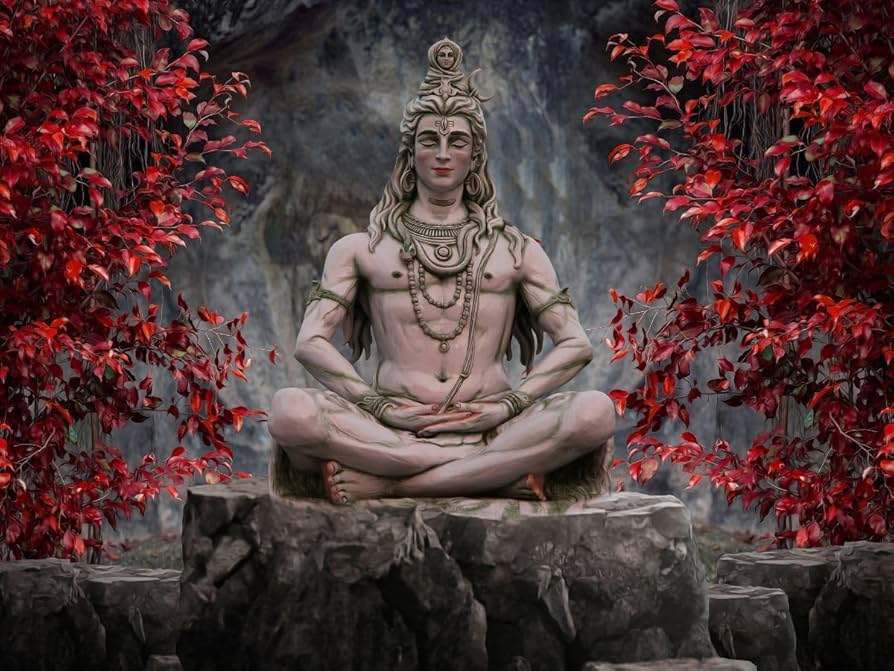
Long before productivity systems and performance metrics defined success, Shiva was depicted in meditation — eyes closed, seated in deep awareness atop Mount Kailash.
Stillness is not fashionable. It does not trend. It does not shout.
And yet, across all eras, the human mind has faced the same core struggles — distraction, fear, desire, restlessness. Shiva’s meditation represents mastery over the inner world.
Empires have changed. Tools have changed. But the human mind has not evolved as quickly as technology. We still wrestle with anxiety. We still struggle with comparison. We still search for meaning.
Shiva reminds us that peace is not found in external accumulation but in internal alignment.
Meditation, reflection, silence — these are not religious acts. They are timeless disciplines of self-awareness. The lesson is evergreen because the human condition is evergreen.
Destruction as a Necessary Phase of Growth
Shiva is often called “The Destroyer,” part of the cosmic trinity alongside Brahma and Vishnu. At first glance, destruction feels ominous. But look at nature.
Forests burn — and regrow stronger.
Seasons end — and begin again.
Cells die — and renew.
Destruction is not the opposite of creation. It is part of the cycle. Across centuries, human beings have feared endings — the end of relationships, careers, identities, even beliefs. Yet every meaningful transformation begins with letting go.
Shiva’s role as destroyer teaches an eternal truth: growth requires release.
The courage to outgrow an outdated version of yourself is as relevant today as it was thousands of years ago. His symbolism reassures us that endings are not failures — they are transitions.
The Balance Within: Beyond Division
One of the most profound representations of Shiva is Ardhanarishvara, the form in which he appears united with Parvati — half masculine, half feminine.
This image transcends social structures and time-bound debates. It speaks to an eternal principle: wholeness comes from integration. Every human being carries logic and intuition. Strength and tenderness. Action and receptivity.
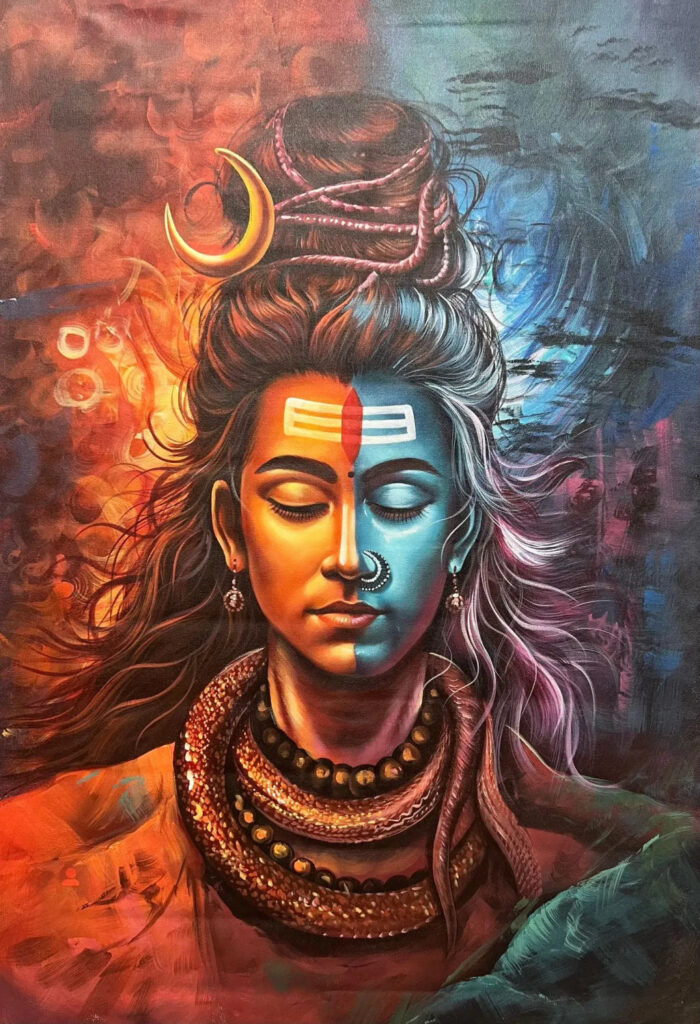
When one dominates excessively, imbalance follows. The symbol of Ardhanarishvara does not belong to one generation’s conversation about identity. It belongs to the universal human journey toward harmony within.
Across centuries, societies have struggled with division — between genders, ideologies, cultures. Shiva’s integrated form suggests a deeper truth: unity begins internally. This lesson does not expire.
Detachment in a World of Desire
Shiva is depicted wearing simple garments, smeared in ash, seated in nature rather than palaces. While other deities are adorned with jewels and gold, Shiva remains austere.
Ash, in symbolism, represents the end state of all material forms. Everything eventually turns to ash. The message is subtle but powerful: nothing external is permanent.
Every era has faced the temptation of material attachment — whether it was land, wealth, power, status, or influence. While the forms of desire change, the impulse remains constant.
Shiva’s detachment is not rejection of the world. It is freedom from dependence on it. He shows that true strength lies not in possession, but in independence from possession. That principle holds true whether in ancient kingdoms or modern economies.
The Story of the Poison: Responsibility Over Comfort
In the legend of the cosmic ocean churning, a deadly poison emerged that threatened existence itself. Shiva chose to consume it, holding it in his throat to protect creation, earning the name Neelkanth.
Symbolically, this story transcends mythology.
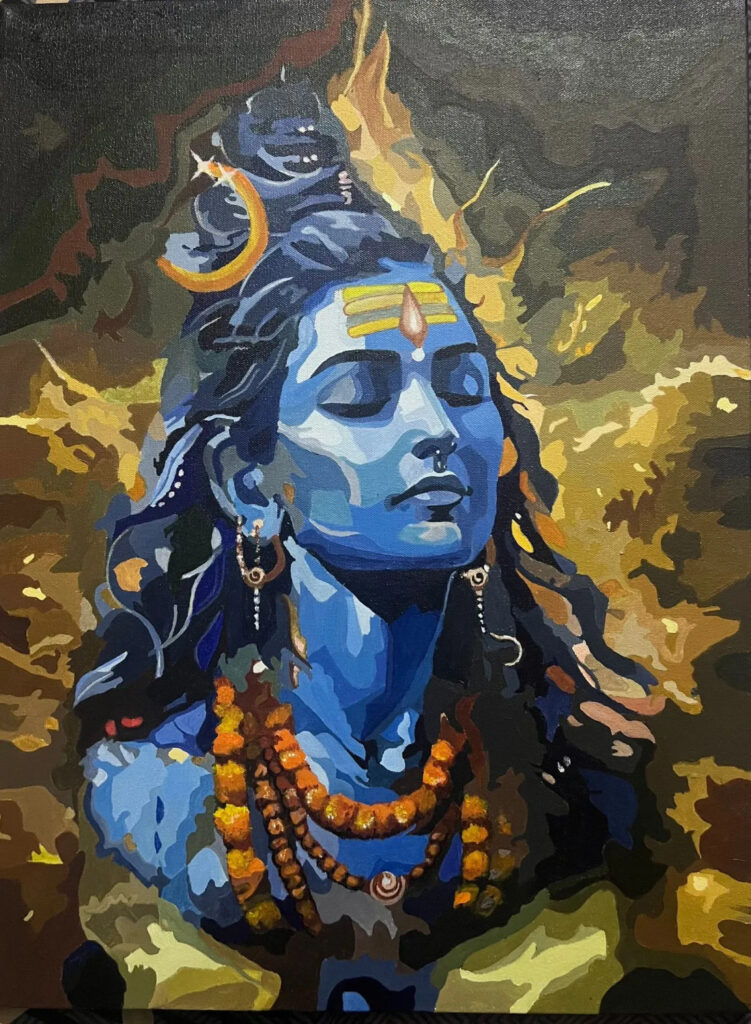
Every era faces collective challenges. Every family, community, and generation encounters moments when someone must step forward and absorb difficulty to prevent greater harm.
To “drink poison” does not mean self-destruction. It means accepting responsibility without spreading negativity. It means transforming pain rather than amplifying it.
Across history, societies have progressed because individuals chose responsibility over comfort. Shiva’s act is a metaphor for courage and emotional resilience — qualities that never lose relevance.
Read More : The Eternal Love Story of Lord Shiva and Goddess Parvati — The Heart of Mahashivratri
The Cosmic Dance: Accepting Change
As Nataraja, Shiva performs the Tandava — the cosmic dance of creation and dissolution.
Change is the only constant across time. Languages evolve. Borders shift. Traditions adapt. Knowledge expands. Resistance to change creates suffering. Alignment with change creates growth.
The dance of Nataraja symbolizes that destruction and creation are not separate events — they are rhythmic movements of the same cycle. This is not a lesson limited to one era of social transformation or technological revolution. It is a universal law.
When we learn to “dance” with life rather than control it rigidly, we move in harmony with existence itself.
Love as Partnership, Not Possession
The relationship between Shiva and Parvati is often portrayed as one of deep devotion and spiritual equality. Parvati undertakes profound effort to unite with him. Shiva, the ascetic, learns to embrace worldly love without losing inner stillness.
Their union represents partnership built on growth, respect, and balance. Across centuries, cultures have debated the nature of love — romantic, spiritual, practical. Yet the essential longing remains unchanged: to be understood and to evolve alongside another.
Shiva’s story teaches that love is not about dominance or dependency, but about shared awakening. That truth resonates beyond time.
The Third Eye: Awareness Beyond Illusion
Shiva’s third eye symbolizes higher perception — the ability to see beyond surface appearances.
Human beings have always been susceptible to illusion — whether through power, ideology, pride, or ego. While the specific illusions of each era differ, the core challenge remains the same: distinguishing truth from distortion. The third eye represents awareness, discernment, and insight. When opened in mythology, it burns falsehood.
In practical terms, this symbolizes clarity of thought and self-awareness. It reminds us to question assumptions, to observe before reacting, and to look beyond appearances. Wisdom is timeless because ignorance is timeless.
Why Shiva Endures
Many mythological figures are bound to cultural contexts. Shiva transcends them because his symbolism addresses universal human experiences: The struggle with the mind. The inevitability of change. The necessity of balance. The courage to let go. The responsibility to act. The search for truth.
He is paradox embodied — ascetic yet householder, destroyer yet compassionate, fierce yet meditative.
Perhaps that is why he endures. Human beings are paradoxical too. We seek success but crave peace. We desire connection but fear vulnerability. We resist change but long for growth. Shiva does not resolve these contradictions by eliminating them. He harmonizes them.
An Eternal Archetype, Not a Passing Trend
Relevance is often tied to fashion — what aligns with the current mood of society. But timelessness is different. Timelessness speaks to the underlying patterns of human existence. Shiva is timeless because he represents processes that never cease: creation, preservation, destruction, transformation.
Whether one approaches him through devotion, philosophy, symbolism, or psychology, the lessons remain intact. You do not have to stand in a temple to learn from Shiva.
You learn from him when you sit quietly with your thoughts. When you release what no longer serves you. When you choose balance over extremes. When you accept change instead of resisting it. When you act responsibly in difficult times.
When you seek truth beyond illusion.
That is why Shiva is not confined to the past.
He is an eternal mirror — reflecting the human journey in every age. And as long as human beings continue to grow, struggle, love, fear, evolve, and awaken, the lessons of Lord Shiva will remain — not as relics of mythology, but as living wisdom woven into the fabric of existence itself.