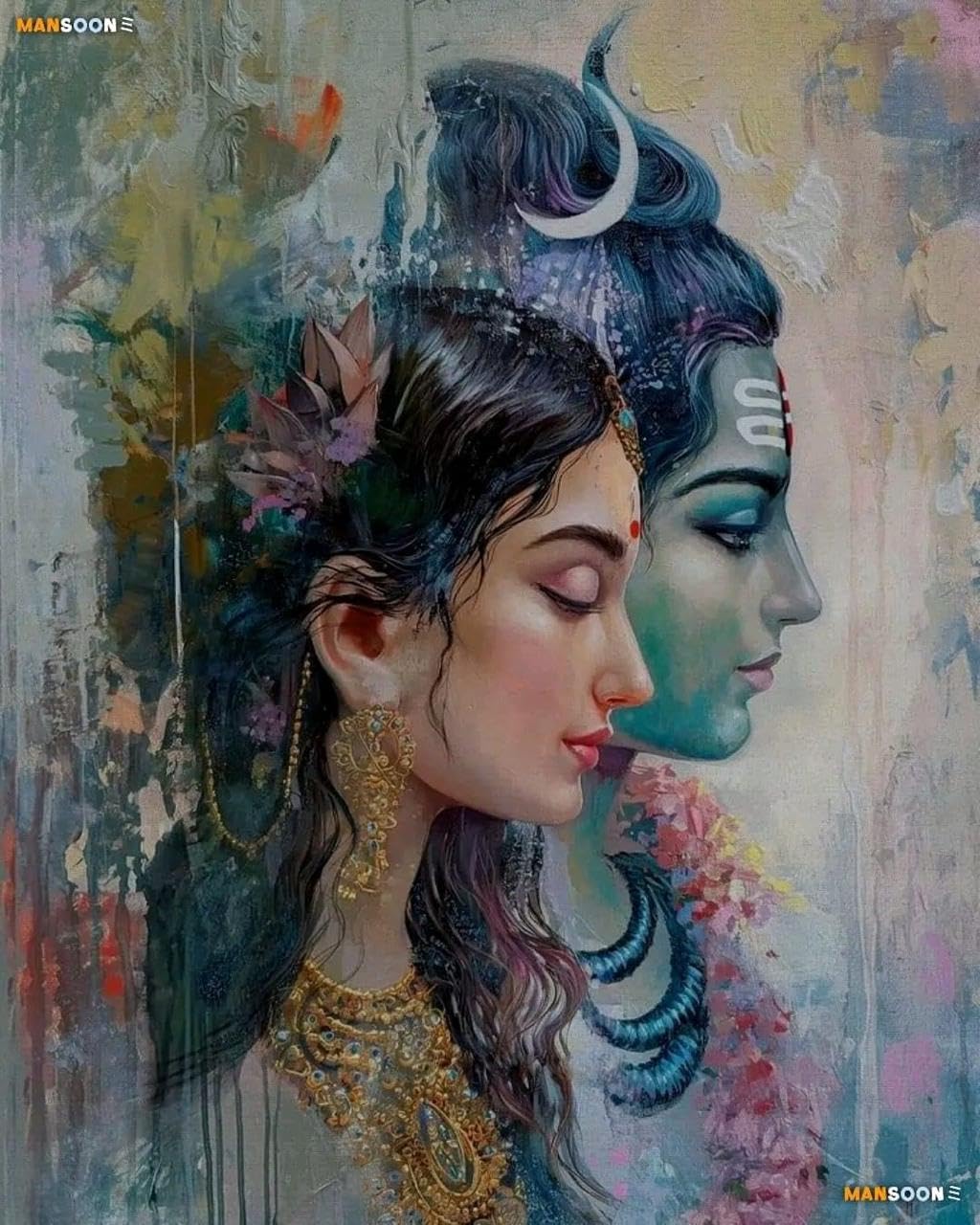
Among the countless legends of Sanatan Dharma, few love stories are as profound, powerful, and spiritually symbolic as that of Shiva and Parvati. Their union is not merely a divine romance — it is the cosmic merging of consciousness and energy, stillness and strength, destruction and creation.
This sacred love story is celebrated every year on Maha Shivaratri — the Great Night of Shiva — when devotees commemorate their divine marriage and the spiritual truths it represents.
Let us journey through this timeless tale.
Before Parvati — The Story of Sati
Long before Parvati was born, Shiva was married to Goddess Sati, the daughter of King Daksha. Sati loved Shiva deeply, but her father disapproved of him. Shiva was an ascetic — clothed in tiger skin, smeared with ash, dwelling in cremation grounds — far from the royal image Daksha desired for his daughter.
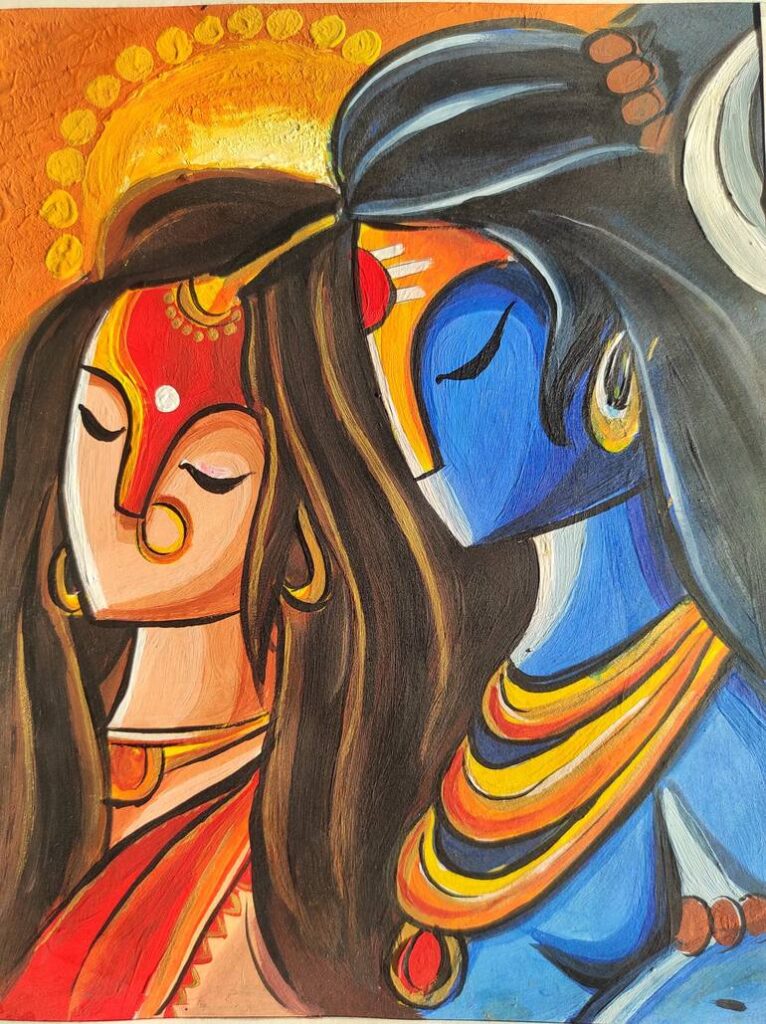
When Daksha organized a grand yajna (sacred ritual), he deliberately insulted Shiva by not inviting him. Sati, unable to bear the humiliation of her beloved, immolated herself in the sacrificial fire.
Grief-stricken and enraged, Shiva performed the fierce Tandava — the cosmic dance of destruction. The universe trembled. To restore balance, Lord Vishnu dismembered Sati’s body, and her remains fell across the land, forming the sacred Shakti Peethas.
Heartbroken, Shiva withdrew from the world and immersed himself in deep meditation in the Himalayas.
The Birth of Parvati
Time passed. The gods faced a new threat: the demon Tarakasura, who had received a boon that only Shiva’s son could defeat him. But Shiva remained detached, lost in meditation.
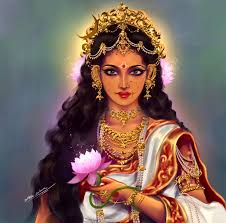
To restore cosmic order, Sati was reborn as Parvati, the daughter of King Himavan (the Himalayas) and Queen Mena. From childhood, Parvati felt an inexplicable pull toward Shiva. When she learned of her previous birth as Sati, her purpose became clear — she was destined to reunite with him.
The Tapasya of Love
Parvati resolved to win Shiva’s heart — not through charm or beauty, but through devotion and intense penance.
She left her royal comforts and began severe tapasya (austerities). She meditated for years in forests, enduring extreme heat, bitter cold, and hunger. According to legend, she survived only on leaves — and eventually even gave those up, earning the name “Aparna” (one who eats no leaves).
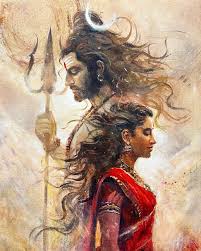
Meanwhile, the gods sought help from Kama, the god of love, to awaken Shiva from meditation. Kama shot his arrow of desire toward Shiva. Enraged at being disturbed, Shiva opened his third eye and reduced Kama to ashes.
But Parvati’s devotion was unwavering. Her love was not born of desire — it was pure, patient, and spiritual.
Finally, Shiva decided to test her resolve. Disguised as a sage, he approached Parvati and mocked Shiva, calling him an unworthy ascetic. Parvati, angered by the insult, defended Shiva with fierce loyalty.
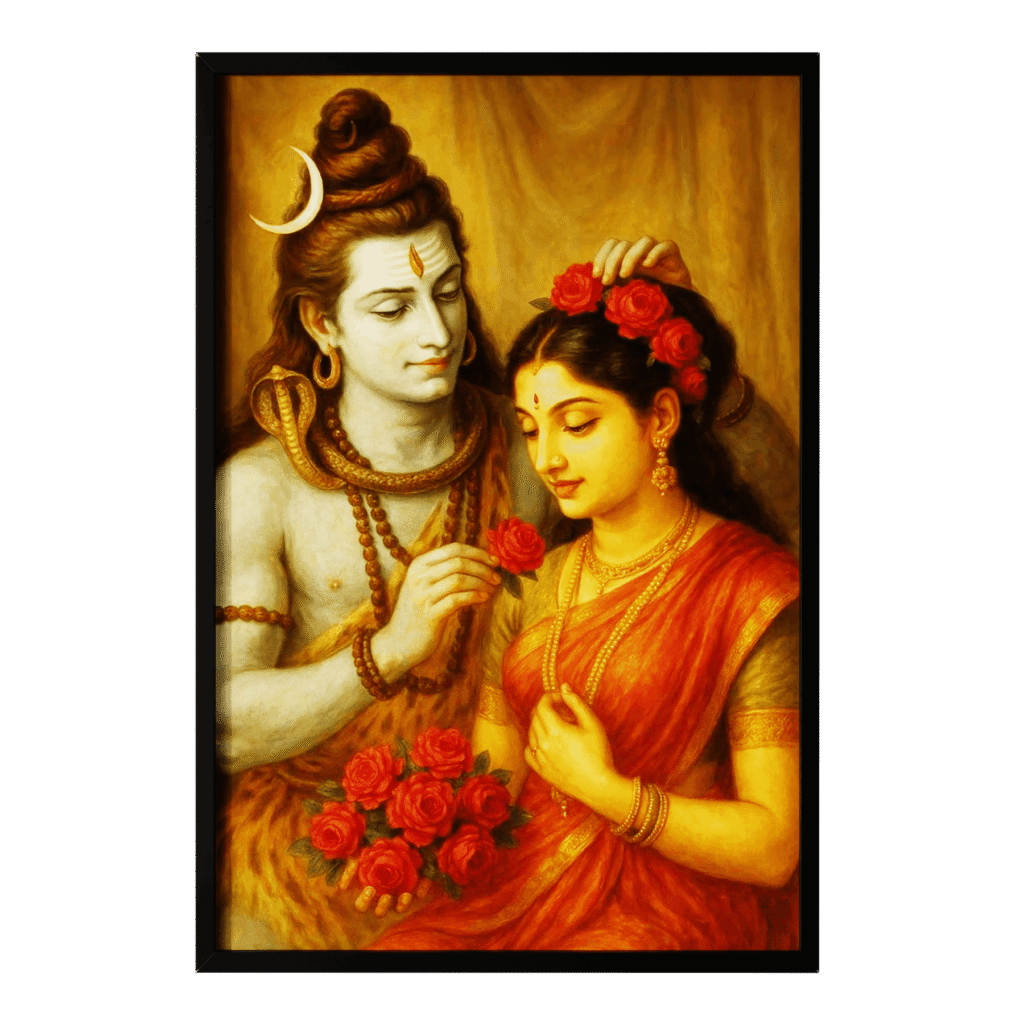
Satisfied by her steadfastness, Shiva revealed his true form and accepted her as his consort.
The Divine Wedding
The celestial wedding of Shiva and Parvati is described as one of the grandest events in divine history.
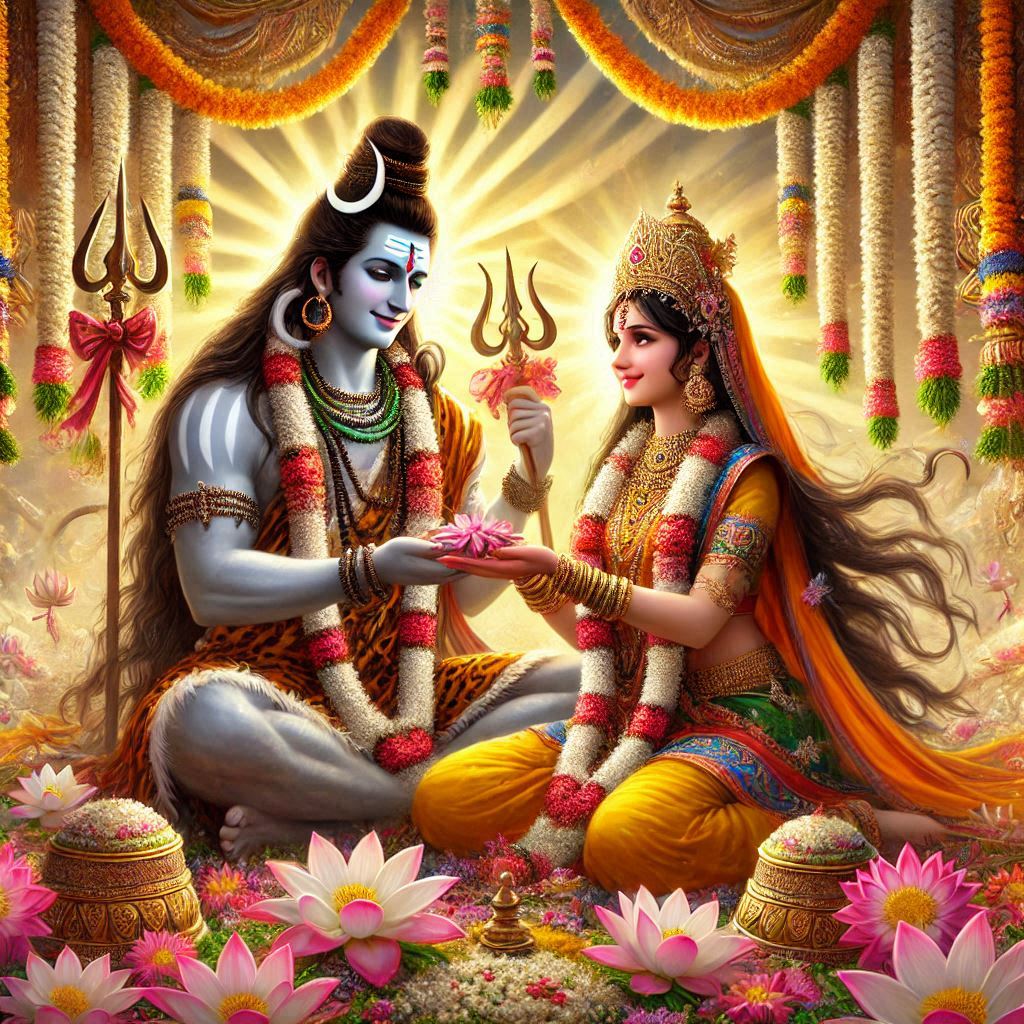
Gods, sages, celestial beings, and spirits gathered to witness the union. Shiva arrived with an unusual wedding procession — ghosts, ganas, serpents, and mystical beings accompanied him. His appearance startled Parvati’s family, but when Shiva manifested his radiant and benevolent form, all fears vanished.
Their marriage symbolized more than union — it represented cosmic balance:
- Shiva as pure consciousness
- Parvati as divine energy (Shakti)
- Together, they became the creative force of the universe
From their union were born Kartikeya (who later defeated Tarakasura) and Ganesha, the remover of obstacles.
Why Their Love Story Is Celebrated as Mahashivratri
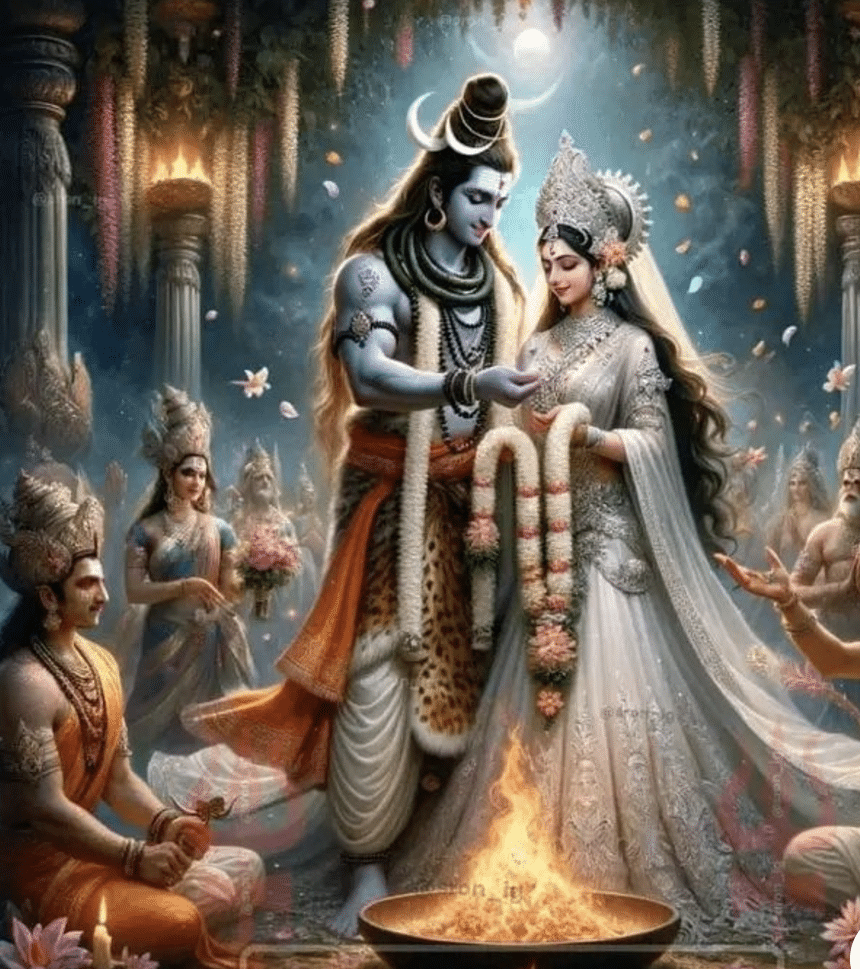
Mahashivratri is believed to mark the sacred night of Shiva and Parvati’s wedding. It is the celebration of divine love, devotion, and spiritual awakening.
But its meaning goes deeper.
Shiva represents stillness — the silent witness within us.
Parvati represents energy — the dynamic force of life.
Their union symbolizes the merging of masculine and feminine energies within every human being. When these energies are balanced, enlightenment dawns.
Thus, Mahashivratri is not merely a remembrance of a wedding. It is a reminder that devotion, patience, and purity of intention can unite the soul with the Divine.
How Mahashivratri Is Celebrated Today
Across India and around the world, Mahashivratri is observed with deep reverence.
Fasting (Vrat)
Devotees fast to purify the body and mind. Some consume fruits and milk; others observe a strict nirjala fast (without water).
Night-long Vigil (Jaagran)
Since it is believed that Shiva and Parvati were married at night, devotees stay awake, chanting “Om Namah Shivaya” and singing bhajans.
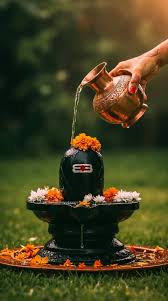
Abhishekam Ritual
The Shiva Lingam is bathed with water, milk, honey, curd, ghee, and sacred offerings. The Shiva Lingam represents Shiva’s infinite nature and creative power.
Temple Celebrations
Grand celebrations occur in sacred cities such as:
- Varanasi — where the ghats resonate with chants and lamps illuminate the Ganges.
- Haridwar — where devotees gather along the holy river.
- Ujjain — home to the revered Mahakaleshwar Jyotirlinga.
Many temples reenact the divine wedding ceremony, known as “Shiv-Parvati Vivah,” symbolizing eternal companionship.
The Deeper Spiritual Meaning
The love of Shiva and Parvati teaches timeless lessons:
- True Love Is Devotion – Parvati’s patience and perseverance show that love rooted in dedication transcends time.
- Transformation Is Possible – Shiva, the detached ascetic, embraced worldly life without losing his spiritual depth.
- Balance Is Essential – Life flourishes when consciousness and energy, logic and emotion, strength and compassion coexist.
Their story is a reminder that love is not merely emotional attachment; it is spiritual alignment.
Mahashivratri in the Modern World
Today, Mahashivratri has become both a spiritual and cultural celebration. Beyond rituals, many observe it through meditation programs, community service, and spiritual discourses.
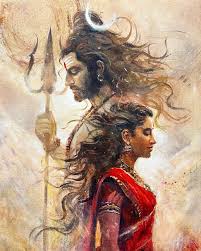
In homes, families decorate shrines, offer bel leaves to Shiva, and narrate the story of Shiva and Parvati to younger generations. Couples pray for marital harmony, drawing inspiration from the divine pair.
For unmarried women especially, Parvati’s tapasya symbolizes faith in finding a worthy partner — one rooted in virtue and depth.
A Love Beyond Time
The story of Shiva and Parvati is not bound by mythology alone. It is a living metaphor for the journey of every soul.
Shiva resides in silence within us.
Parvati represents our seeking, striving nature.
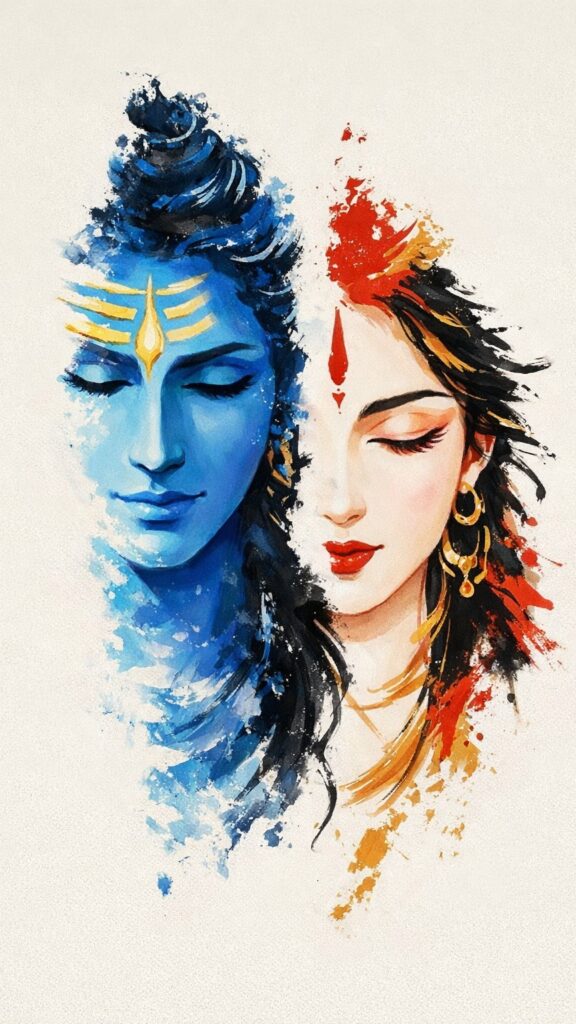
When effort (Parvati) meets awareness (Shiva), the result is divine union — self-realization.
That is why, on Mahashivratri, millions stay awake through the night. They are not merely remembering a wedding; they are participating in an inner marriage — the union of body and spirit, action and stillness, human and divine.
True love demands strength
The love story of Shiva and Parvati is eternal because it is universal. It speaks of loss and rebirth, longing and fulfillment, patience and destiny. It shows that true love demands strength, sacrifice, and unwavering faith.
Mahashivratri stands as a celebration of this divine union — a night when devotion transforms into awakening and love becomes liberation.
As lamps flicker in temples and chants echo through the night, devotees bow before the cosmic couple, remembering that the greatest love story ever told is not only divine — it is within us.
Om Namah Shivaya.