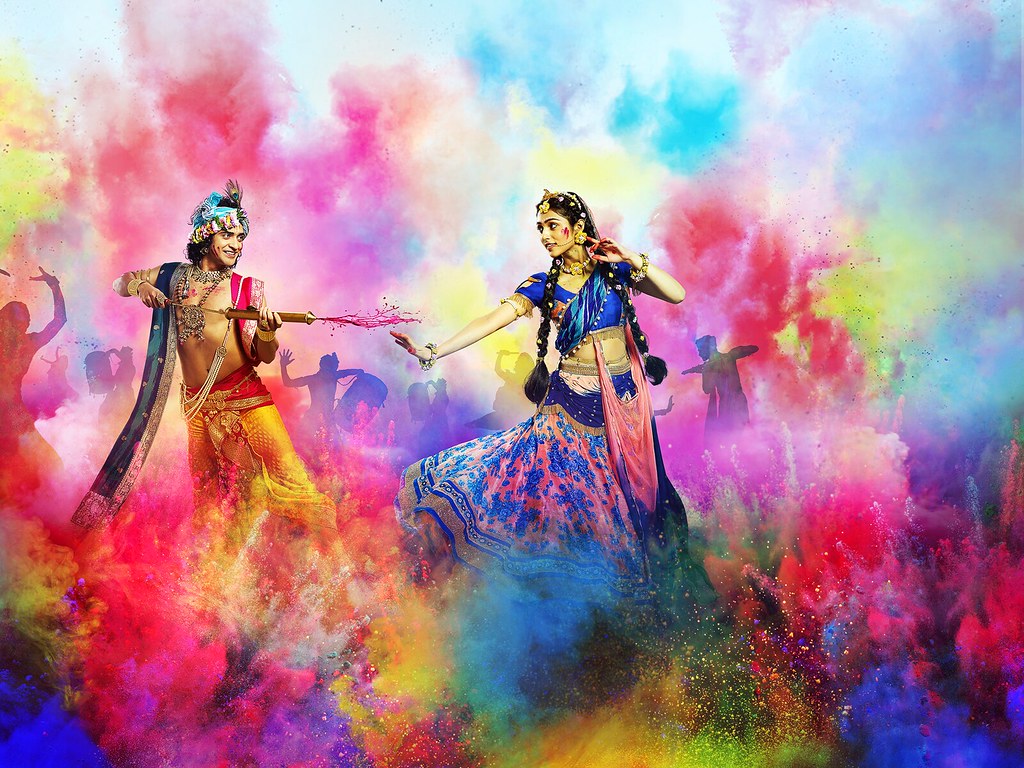
Introduction: Understanding the Spiritual Essence of Holi
Holi, the vibrant festival of colors, is far more than a celebration of joy, music, and playful splashes of color. It is deeply rooted in Indian spirituality and mythology, especially in the divine love story of Krishna and Radha. Across India and many parts of the world, Holi marks the arrival of spring, the triumph of good over evil, and the blossoming of devotion in the human heart. Yet, beyond the festive atmosphere lies a profound spiritual narrative that connects humanity to divine love.
The story of Krishna’s playful leelas (divine pastimes) in Vrindavan with Radha and the Gopis forms the emotional and spiritual foundation of Holi celebrations. Their love is not merely romantic; it symbolizes the eternal bond between the soul and the Supreme. Holi becomes a celebration of divine union, surrender, and the joy of pure devotion.
To truly understand Holi, one must look beyond colors and festivities and explore the timeless relationship between Radha and Krishna. It is a festival where spirituality meets celebration, and divine love is expressed through color, music, and devotion.
The Birth of Krishna and the Divine Mission
The story begins with the birth of Lord Krishna in Mathura. Born to Devaki and Vasudeva, Krishna’s arrival was meant to end the tyranny of King Kansa. From his childhood, Krishna displayed extraordinary powers and divine charm. He was raised in Gokul and later in Vrindavan, where his playful and loving nature captivated everyone.
Krishna’s childhood is filled with stories of miracles and mischievous acts that symbolized divine play. From lifting Govardhan Hill to protecting villagers, he was both protector and playful companion. His presence in Vrindavan transformed ordinary life into a sacred celebration of love and devotion.
Yet, among all his relationships, the most profound was with Radha. Krishna’s divine mission was not only to destroy evil but also to awaken hearts through the power of unconditional love.
Who Was Radha? The Embodiment of Pure Devotion
Radha is not merely a character in mythology; she is considered the embodiment of devotion itself. In spiritual traditions, Radha represents the highest form of Bhakti — pure, selfless love for the Divine. While Krishna symbolizes the Supreme Being, Radha symbolizes the soul longing for union.
Their love transcends worldly definitions. It was not bound by social norms or physical proximity. Instead, it reflected spiritual unity and divine harmony. Radha’s love for Krishna was unconditional, selfless, and eternal — a love that sought nothing in return.
In many devotional texts and traditions, Radha is considered even more significant than Krishna because she represents the devotee’s path to God. Through Radha, we understand that divine love is about surrender, faith, and complete absorption in the beloved.
The Play of Colors: The Origin of Holi in Vrindavan
The playful celebration of Holi is said to have originated from Krishna’s childhood in Vrindavan. According to legend, young Krishna once complained to his mother Yashoda about Radha’s fair complexion compared to his dark skin. In response, Yashoda playfully suggested that he apply color to Radha’s face.
This innocent act became a symbol of love and equality. Krishna playfully smeared colors on Radha and the Gopis, and thus began the tradition of Holi. The act of applying color represents dissolving differences and celebrating unity in diversity.
In Vrindavan and Barsana, this tradition continues with immense devotion. Holi is not just about colors; it is about expressing divine love without boundaries or ego.
Spiritual Meaning Behind Krishna and Radha’s Love
The love between Radha and Krishna is often misunderstood as romantic, but spiritually it carries deeper symbolism. Krishna represents the Divine Consciousness, while Radha represents the human soul. Their union signifies the merging of the individual self with the Supreme.
The colors of Holi symbolize various emotions — joy, compassion, love, and surrender. When devotees celebrate Holi, they symbolically participate in Krishna’s divine play. Throwing colors becomes an expression of letting go of ego and embracing spiritual unity.
Radha’s unwavering devotion teaches that true love requires surrender and faith. The real Holi is played in the heart, where the soul longs to merge with divine love.
Holi as a Celebration of Bhakti and Joy
Holi is deeply connected to the Bhakti movement, which emphasized personal devotion to God. Saints like Meera Bai and Surdas sang of Krishna’s love and described Holi as a divine celebration of devotion. In temples across India, devotees sing bhajans and reenact Krishna’s playful acts.
The festival brings communities together, breaking social barriers and fostering unity. Rich and poor, young and old — everyone participates equally. Holi reminds us that in divine love, all distinctions fade away.
Beyond the external celebration, Holi invites individuals to cleanse their hearts of negativity. It is a spiritual renewal where joy replaces sorrow and love conquers pride.
Lessons from the Divine Love of Radha and Krishna
The story of Radha and Krishna teaches timeless lessons about love and spirituality. First, it teaches selflessness. Radha loved Krishna without expectation or possession. Second, it teaches surrender — complete trust in the Divine will.
Their love also demonstrates detachment. Though Krishna eventually left Vrindavan, Radha’s devotion remained unwavering. True love, as shown by Radha, does not depend on physical presence but on spiritual connection.
In today’s world, where relationships often struggle with ego and expectation, their story offers guidance. Divine love is pure, patient, and transformative — a love that elevates rather than confines.
The Real Story Behind Holi: Beyond the Colors
While Holi is also associated with the legend of Prahlad and Holika, the colorful celebrations are primarily inspired by Krishna’s playful love. The festival combines themes of devotion, victory of good over evil, and spiritual awakening.
In places like Vrindavan and Barsana, Holi celebrations last for days, filled with devotional songs and rituals. Devotees believe that participating in these celebrations brings them closer to Krishna’s divine presence. Holi becomes a reminder that life itself is a divine play guided by love and faith.
Ultimately, the true story behind Holi lies in understanding its spiritual message. It is a celebration of the soul’s longing for God, expressed through joy, color, and devotion.
Conclusion: Experiencing Holi as Divine Love
The divine love of Krishna and Radha is not confined to ancient scriptures; it lives on in every heart that seeks spiritual connection. Holi is an opportunity to rediscover this love within ourselves. It invites us to let go of resentment, embrace unity, and celebrate the presence of the Divine in everyday life.
As we play with colors, we are reminded of Krishna’s playful spirit and Radha’s deep devotion. Each color represents a blessing, each smile a reflection of divine joy.
In its truest sense, Holi is not just a festival — it is a spiritual journey. When we understand the real story behind Holi, we realize that the greatest celebration is the awakening of divine love within our own hearts.