Tag: festival of colours

  • The Divine Love of Krishna and Radha: The Real Story Behind Holi

    The Divine Love of Krishna and Radha: The Real Story Behind Holi

    Introduction: Understanding the Spiritual Essence of Holi

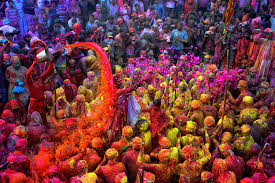
    Holi, the vibrant festival of colors, is far more than a celebration of joy, music, and playful splashes of color. It is deeply rooted in Indian spirituality and mythology, especially in the divine love story of Krishna and Radha. Across India and many parts of the world, Holi marks the arrival of spring, the triumph of good over evil, and the blossoming of devotion in the human heart. Yet, beyond the festive atmosphere lies a profound spiritual narrative that connects humanity to divine love.

    The story of Krishna’s playful leelas (divine pastimes) in Vrindavan with Radha and the Gopis forms the emotional and spiritual foundation of Holi celebrations. Their love is not merely romantic; it symbolizes the eternal bond between the soul and the Supreme. Holi becomes a celebration of divine union, surrender, and the joy of pure devotion.

    To truly understand Holi, one must look beyond colors and festivities and explore the timeless relationship between Radha and Krishna. It is a festival where spirituality meets celebration, and divine love is expressed through color, music, and devotion.


    The Birth of Krishna and the Divine Mission

    The story begins with the birth of Lord Krishna in Mathura. Born to Devaki and Vasudeva, Krishna’s arrival was meant to end the tyranny of King Kansa. From his childhood, Krishna displayed extraordinary powers and divine charm. He was raised in Gokul and later in Vrindavan, where his playful and loving nature captivated everyone.

    Krishna’s childhood is filled with stories of miracles and mischievous acts that symbolized divine play. From lifting Govardhan Hill to protecting villagers, he was both protector and playful companion. His presence in Vrindavan transformed ordinary life into a sacred celebration of love and devotion.

    Yet, among all his relationships, the most profound was with Radha. Krishna’s divine mission was not only to destroy evil but also to awaken hearts through the power of unconditional love.


    Who Was Radha? The Embodiment of Pure Devotion

    Radha is not merely a character in mythology; she is considered the embodiment of devotion itself. In spiritual traditions, Radha represents the highest form of Bhakti — pure, selfless love for the Divine. While Krishna symbolizes the Supreme Being, Radha symbolizes the soul longing for union.

    Their love transcends worldly definitions. It was not bound by social norms or physical proximity. Instead, it reflected spiritual unity and divine harmony. Radha’s love for Krishna was unconditional, selfless, and eternal — a love that sought nothing in return.

    In many devotional texts and traditions, Radha is considered even more significant than Krishna because she represents the devotee’s path to God. Through Radha, we understand that divine love is about surrender, faith, and complete absorption in the beloved.


    The Play of Colors: The Origin of Holi in Vrindavan

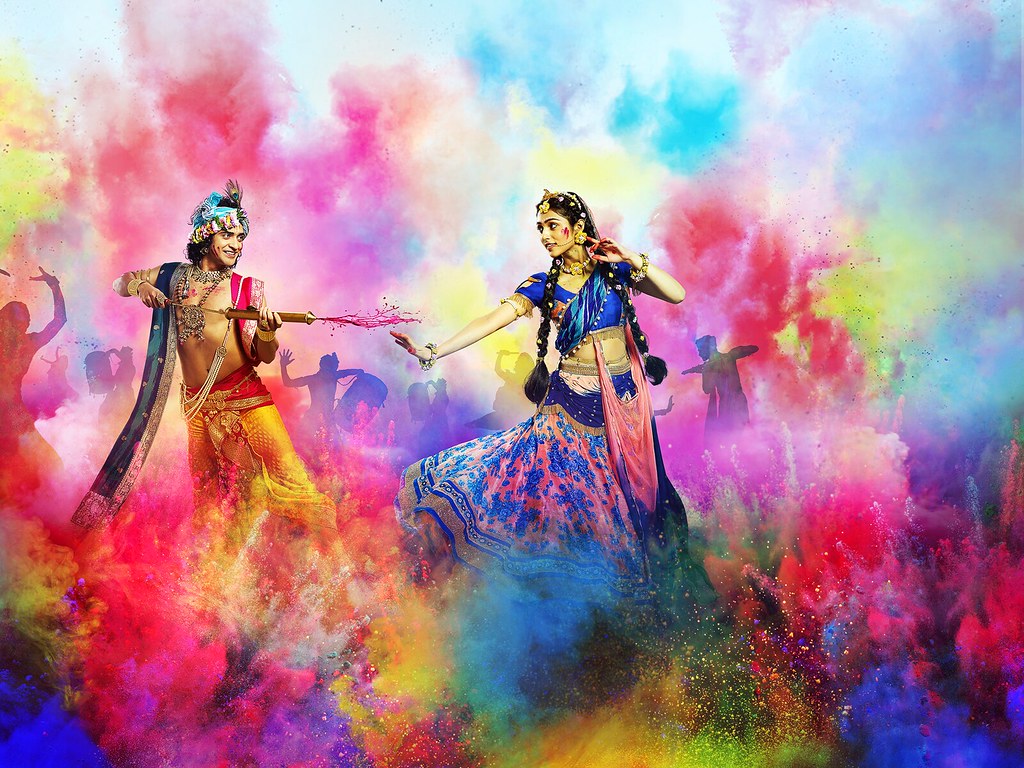
    The playful celebration of Holi is said to have originated from Krishna’s childhood in Vrindavan. According to legend, young Krishna once complained to his mother Yashoda about Radha’s fair complexion compared to his dark skin. In response, Yashoda playfully suggested that he apply color to Radha’s face.

    This innocent act became a symbol of love and equality. Krishna playfully smeared colors on Radha and the Gopis, and thus began the tradition of Holi. The act of applying color represents dissolving differences and celebrating unity in diversity.

    In Vrindavan and Barsana, this tradition continues with immense devotion. Holi is not just about colors; it is about expressing divine love without boundaries or ego.


    Spiritual Meaning Behind Krishna and Radha’s Love

    The love between Radha and Krishna is often misunderstood as romantic, but spiritually it carries deeper symbolism. Krishna represents the Divine Consciousness, while Radha represents the human soul. Their union signifies the merging of the individual self with the Supreme.

    The colors of Holi symbolize various emotions — joy, compassion, love, and surrender. When devotees celebrate Holi, they symbolically participate in Krishna’s divine play. Throwing colors becomes an expression of letting go of ego and embracing spiritual unity.

    Radha’s unwavering devotion teaches that true love requires surrender and faith. The real Holi is played in the heart, where the soul longs to merge with divine love.


    Holi as a Celebration of Bhakti and Joy

    Holi is deeply connected to the Bhakti movement, which emphasized personal devotion to God. Saints like Meera Bai and Surdas sang of Krishna’s love and described Holi as a divine celebration of devotion. In temples across India, devotees sing bhajans and reenact Krishna’s playful acts.

    The festival brings communities together, breaking social barriers and fostering unity. Rich and poor, young and old — everyone participates equally. Holi reminds us that in divine love, all distinctions fade away.

    Beyond the external celebration, Holi invites individuals to cleanse their hearts of negativity. It is a spiritual renewal where joy replaces sorrow and love conquers pride.


    Lessons from the Divine Love of Radha and Krishna

    The story of Radha and Krishna teaches timeless lessons about love and spirituality. First, it teaches selflessness. Radha loved Krishna without expectation or possession. Second, it teaches surrender — complete trust in the Divine will.

    Their love also demonstrates detachment. Though Krishna eventually left Vrindavan, Radha’s devotion remained unwavering. True love, as shown by Radha, does not depend on physical presence but on spiritual connection.

    In today’s world, where relationships often struggle with ego and expectation, their story offers guidance. Divine love is pure, patient, and transformative — a love that elevates rather than confines.


    The Real Story Behind Holi: Beyond the Colors

    While Holi is also associated with the legend of Prahlad and Holika, the colorful celebrations are primarily inspired by Krishna’s playful love. The festival combines themes of devotion, victory of good over evil, and spiritual awakening.

    In places like Vrindavan and Barsana, Holi celebrations last for days, filled with devotional songs and rituals. Devotees believe that participating in these celebrations brings them closer to Krishna’s divine presence. Holi becomes a reminder that life itself is a divine play guided by love and faith.

    Ultimately, the true story behind Holi lies in understanding its spiritual message. It is a celebration of the soul’s longing for God, expressed through joy, color, and devotion.


    Conclusion: Experiencing Holi as Divine Love

    The divine love of Krishna and Radha is not confined to ancient scriptures; it lives on in every heart that seeks spiritual connection. Holi is an opportunity to rediscover this love within ourselves. It invites us to let go of resentment, embrace unity, and celebrate the presence of the Divine in everyday life.

    As we play with colors, we are reminded of Krishna’s playful spirit and Radha’s deep devotion. Each color represents a blessing, each smile a reflection of divine joy.

    In its truest sense, Holi is not just a festival — it is a spiritual journey. When we understand the real story behind Holi, we realize that the greatest celebration is the awakening of divine love within our own hearts.
  • Beyond the Colours:The Vibrant Story Behind the Festival of Colours

    Beyond the Colours:The Vibrant Story Behind the Festival of Colours

    When winter begins to loosen its grip and spring tiptoes into the Indian subcontinent, the air changes. There’s laughter in the streets, bright powders in the markets, and an unmistakable sense of excitement everywhere. It can mean only one thing — Holi, the Festival of Colours, is around the corner.

    Festival of Colours

    Celebrated with unmatched enthusiasm across India and in many parts of the world, Holi is more than just a day of throwing colours. It is a vibrant tapestry of mythology, tradition, community, and joy. Whether you’ve grown up celebrating it or are discovering it for the first time, here’s everything you need to know about this spectacular festival.


    The Mythological Roots of Holi

    Like many Indian festivals, Holi is deeply rooted in ancient legends. One of the most popular stories associated with Holi comes from Hindu mythology — the tale of Prahlada and Holika.

    Festival of Colours

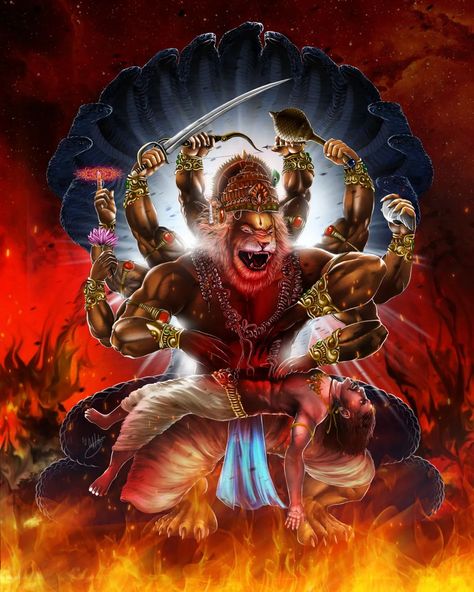
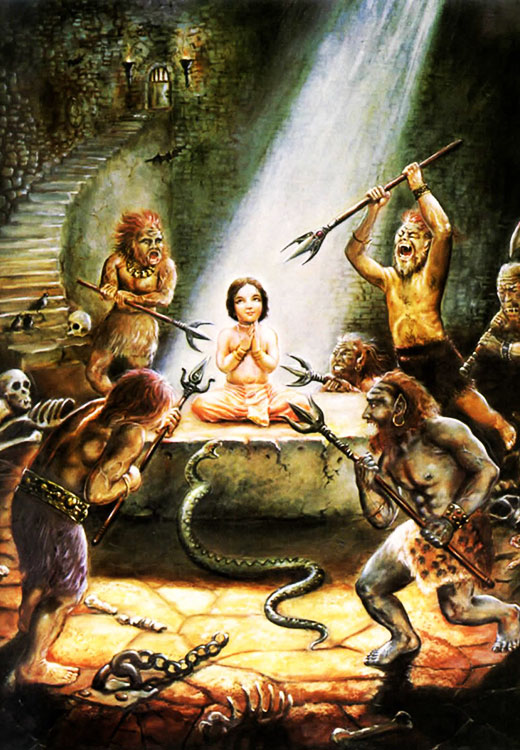
    According to legend, the demon king Hiranyakashipu wanted everyone in his kingdom to worship him as a god. However, his son Prahlada was a devoted follower of Lord Vishnu. Furious at his son’s devotion, Hiranyakashipu tried several times to kill him but failed each time.

    Finally, he sought help from his sister Holika, who possessed a magical cloak that protected her from fire. She tricked Prahlada into sitting with her in a blazing fire, intending to burn him alive. But in a divine twist, the cloak flew off Holika and protected Prahlada instead. Holika was burned to ashes, while Prahlada survived unharmed.

    Festival of Colours

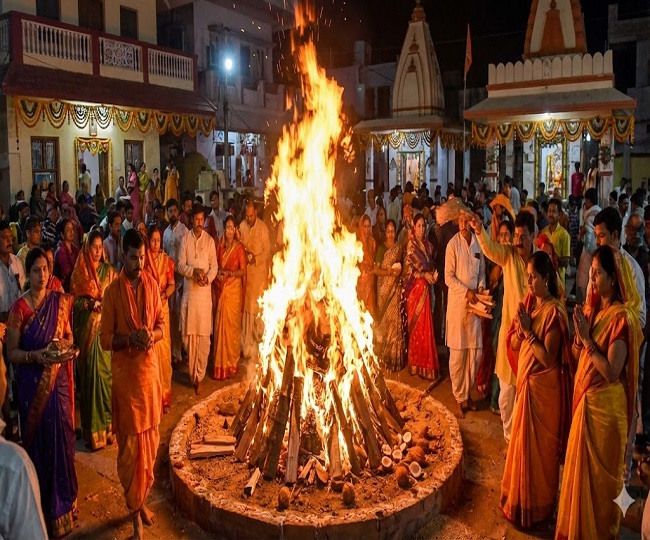
    This victory of good over evil is commemorated on the eve of Holi with a ritual called Holika Dahan, where bonfires are lit to symbolize the burning away of negativity.


    The Legend of Radha and Krishna

    Another beautiful story connected to Holi is the playful love story of Krishna and Radha.

    As the legend goes, young Krishna, who had a dark complexion, was worried that the fair-skinned Radha might not accept him. On his mother’s playful suggestion, he smeared colour on Radha’s face. This innocent act became symbolic of love, equality, and joyful mischief.

    This legend is particularly celebrated in Mathura and Vrindavan, where Holi festivities last for days and reenact Krishna’s playful antics.


    When Is Holi Celebrated?

    Holi is celebrated on the full moon day (Purnima) in the Hindu month of Phalguna, which typically falls in March. The festival lasts two days:

    Holika Dahan – The night of bonfires

    Rangwali Holi – The day of colours

    The timing marks the arrival of spring and the end of winter, symbolizing renewal and fresh beginnings.


    How Holi Is Celebrated

    1. The Night of Bonfires – Holika Dahan

    Communities gather in open spaces to light large bonfires. People sing, dance, and offer prayers. Grains and coconuts are often thrown into the fire as symbolic offerings.

    Holika Dahan

    This ritual is not just religious — it’s communal. It brings neighborhoods together and strengthens social bonds.


    2. The Day of Colours – Rangwali Holi

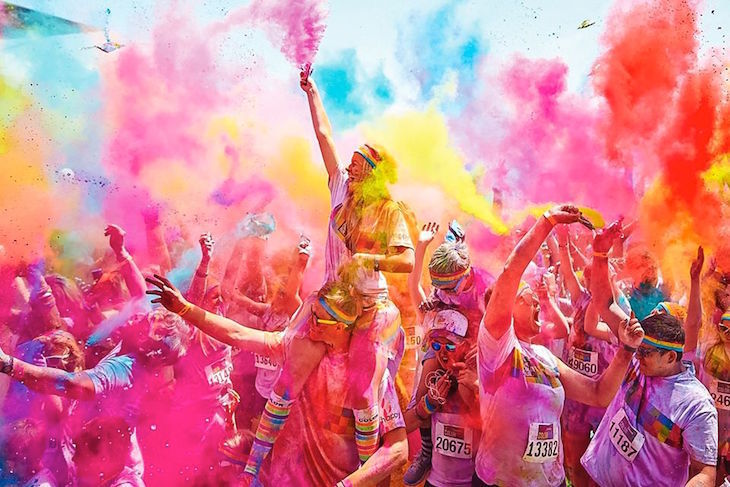
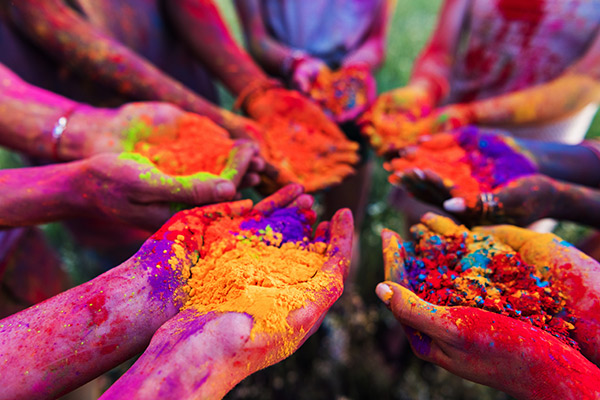
    If Holika Dahan is meaningful, Rangwali Holi is magical. From early morning, people step out armed with: Gulal (colored powders) ,Water balloons ,Water guns (pichkaris), Buckets of colored water.

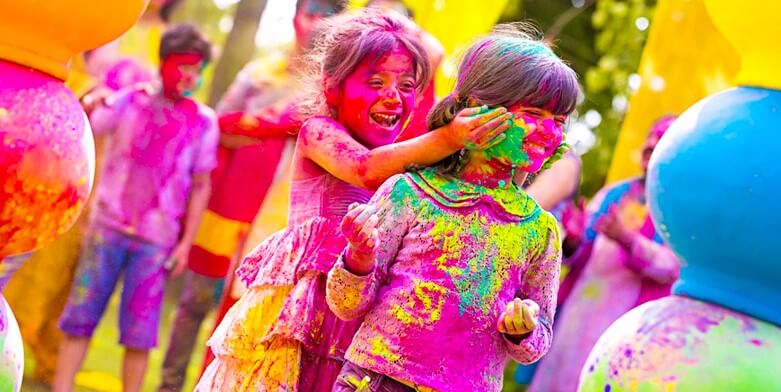
    Friends, family, and even strangers smear colours on each other’s faces, shouting “Happy Holi!” Music blares, people dance in the streets, and laughter echoes everywhere.

    What makes Holi unique is its spirit of equality. On this day, social barriers dissolve. Age, status, and background take a back seat as everyone becomes part of one joyful celebration.


    Special Foods of Holi

    No Indian festival is complete without delicious food, and Holi is no exception. Some traditional treats include:

    Gujiya – A sweet dumpling filled with khoya and dry fruits

    Malpua – Deep-fried pancakes soaked in sugar syrup

    Thandai – A chilled milk-based drink flavored with nuts and spices


    Holi Across India: Different Flavors of Celebration

    Holi is celebrated differently across regions, each with its own charm.

    Lathmar Holi – Barsana

    In the town of Barsana, women playfully hit men with sticks (lathis) as part of a re-enactment of Krishna teasing Radha and her friends. Men defend themselves with shields in a humorous and theatrical event called Lathmar Holi.


    Royal Holi – Udaipur

    In Udaipur, the Mewar royal family hosts grand celebrations at the City Palace, including traditional rituals, cultural performances, and an elaborate Holika Dahan ceremony.


    Shantiniketan’s Cultural Holi

    In Santiniketan, Holi is celebrated as Basanta Utsav, introduced by Rabindranath Tagore. Students dress in yellow, sing Tagore’s songs, and perform cultural programs, giving Holi an artistic and refined touch.


    Holi Around the World

    Thanks to the Indian diaspora, Holi is now celebrated globally — from the United States to the United Kingdom, Australia, and beyond.

    Holi Around the World

    In cities like New York City, London, and Sydney, large public gatherings feature music festivals, color runs, and community events inspired by traditional Holi celebrations.

    Holi has become a symbol of cultural diversity, inclusion, and shared joy worldwide.


    The Deeper Meaning of Holi

    Beyond the colors and festivities, Holi carries profound symbolism:

    Victory of good over evil – Through the story of Prahlada and Holika

    Love and unity – Through Radha and Krishna

    Renewal and rebirth – With the arrival of spring

    Forgiveness and fresh starts – Many people use Holi as an opportunity to mend broken relationships .It reminds us that life, much like Holi, is meant to be colorful.


    Eco-Friendly Holi: A Growing Awareness

    In recent years, awareness around environmental impact has grown. Traditional Holi colors were made from flowers and natural ingredients, but synthetic colors can harm skin and the environment.

    Today, many people are returning to: Organic gulal ,Flower petals, Minimal water usage ,Sustainable celebrations.

    An eco-friendly Holi ensures that the joy of the festival does not come at nature’s expense. Holi is about fun, but it is equally about mutual respect and consent.


    Why Holi Captures Hearts Everywhere

    Few festivals in the world are as visually stunning and emotionally uplifting as Holi. It’s a rare celebration where tradition meets spontaneity, devotion blends with delight, and communities unite in shared happiness.

    The explosion of colours is not just external — it reflects the internal vibrancy of human connection. Holi encourages us to let go of grudges, embrace joy, and welcome new beginnings with open arms.

    Holi Captures Hearts

    In a world often divided by differences, Holi stands as a radiant reminder that life is better when we celebrate together.

    So when the air fills with color and laughter this spring, don’t hold back. Step outside, embrace the spirit of Holi, and let yourself be painted in joy.

    Happy Holi!